
The Machines Built from Uncertainty

For most of human history, we built tools around the world as we understood it. We made wheels to help objects roll. Clocks because time moves. Computers because logic follows steps and math is a universal language. Input. Process. Output.
To me, there’s something reassuring about classical computers because they feel intuitive. Underneath the complexity, they reduce information into certainty: tiny switches that are either on or off.
A 1 or a 0. Yes or no. Something or nothing.
Then we looked deeper into reality and discovered that nature itself doesn’t always operate that way. At the quantum level, certainty begins loosening around the edges. Particles can exist in states described by probabilities rather than fixed outcomes. Systems can become entangled. Possibilities can coexist in ways that feel almost impossible from an everyday perspective.
And at some point, humans had an absurd idea: What if we stopped fighting the strange behavior of quantum mechanics and built machines from it?
That question eventually became the foundation of Quantum computing.
Instead of using bits that exist as either 0 or 1, quantum computers use qubits. And qubits behave differently. Through principles like Quantum superposition, they can exist in combinations of states before measurement. This doesn’t mean a quantum computer tries every answer simultaneously in the simple way people often imagine. That explanation sounds nice, but reality is more nuanced. What it does mean is that quantum systems can represent and manipulate information in ways that classical systems cannot easily replicate. And suddenly computation isn’t following a direct path but navigating possibility itself.
—
I remember the first time I tried to understand quantum computers. I wanted them to make sense in the way ordinary machines do. I wanted to imagine tiny futuristic circuits operating faster and faster until eventually becoming almost magical.
But the deeper I looked I realized it’s not just speed, quantum computing isn’t simply about making existing computers quicker. It’s about changing the framework entirely.
I find that fascinating because it feels strangely human too. We often assume solving problems means pushing harder in the same direction. Thinking more. Trying more. Repeating more. Then occasionally life introduces an entirely different approach. Different architecture. Different assumptions. A different way of seeing the problem itself.
—
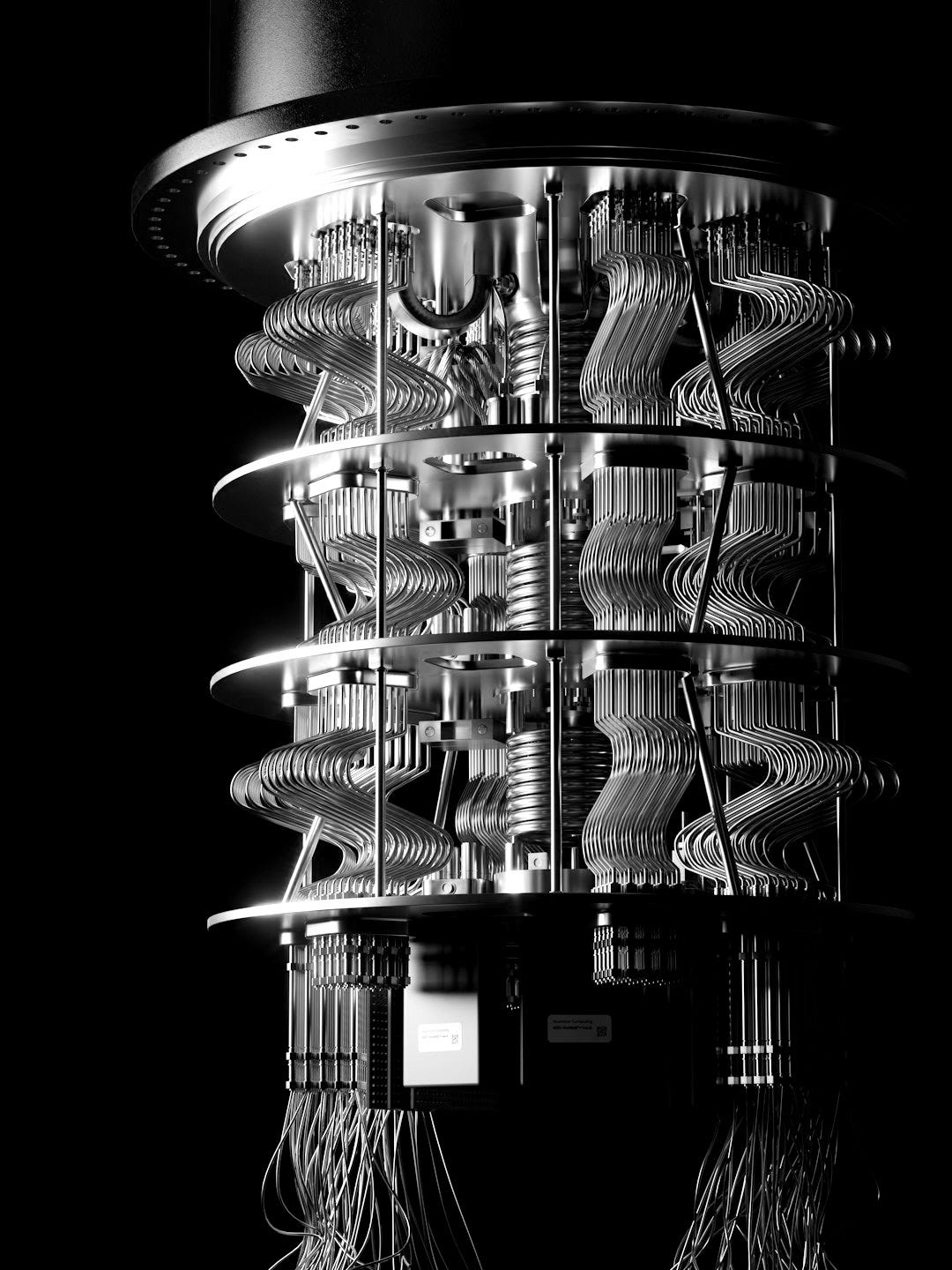
Quantum computers are still developing. They remain delicate systems because quantum states are extraordinarily sensitive to disturbance. Tiny interactions with the environment can introduce errors and collapse fragile states.
Strangely beautiful because some of the most advanced machines humans have ever attempted to build require incredible care.
Cold temperatures near absolute zero. Isolation. Precision.
There’s something poetic about that.
We built machines from uncertainty itself.
From the very parts of reality that once seemed too strange to be useful. Somehow, out of probability and fragility and things behaving in ways our intuition resists, a new form of computation emerged.
To me, if you view quantum mechanics from a consciousness-first perspective you can see that space is not about distance and time is not about the past and future and that the wave function collapses due to the action of conscious agency - a choice among the possibilities.
Note: Because consciousness is viewed here as fundamental, conscious agency does not have to be “human” consciousness, but can be.
Well explained for the laymen. #understood